
Understanding What It Means to Be Human
Human Biology explores the most fascinating and complex system in existence – the human body. Choosing ATAR Human Biology allows students to uncover how their bodies function, adapt, and maintain balance from the cellular level to whole systems. It is the science of life applied directly to us – connecting every breath, heartbeat, and thought to the biological mechanisms that make them possible.
For many students, Human Biology is where curiosity meets relevance. It answers questions such as Why do we feel tired after exercise?, How do our senses detect the world around us?, and What happens when the body’s systems fail? By understanding the human organism, students learn not only how life works but how to care for and improve it – a foundation that underpins countless careers and life skills.
The SCSA Human Biology Curriculum: Exploring the Science of Life
The SCSA ATAR Human Biology syllabus is designed to build a progressive, interconnected understanding of the human body and its relationship with the environment.
- Year 11 (Units 1 & 2) introduces the structure and function of cells, tissues, and organ systems. Students explore topics such as homeostasis, metabolism, the nervous and endocrine systems, and basic human genetics.
- Year 12 (Units 3 & 4) extends this foundation to cover more complex systems of control, reproduction, biotechnology, and the body’s responses to disease and environmental change.
Throughout both years, students investigate how humans maintain internal balance and adapt to changing external conditions.

The course connects anatomy with physiology, ensuring that students understand why each part of the body functions the way it does.
Why Human Biology Matters
Human Biology develops a unique set of skills that extend far beyond the classroom. Students learn to:
- Analyse complex systems — understanding how multiple organs and processes interact.
- Interpret and evaluate data — applying scientific reasoning to biological information.
- Communicate scientific ideas clearly and accurately.
- Apply knowledge to real-world contexts such as health, disease prevention, and performance.
- Think critically about evidence and ethics in biological research.
These skills are foundational for careers in health, medicine, sport science, psychology, forensics, and education, but they also build everyday scientific literacy, helping students make informed decisions about health, nutrition, and the environment.
The Human Body as a Living System
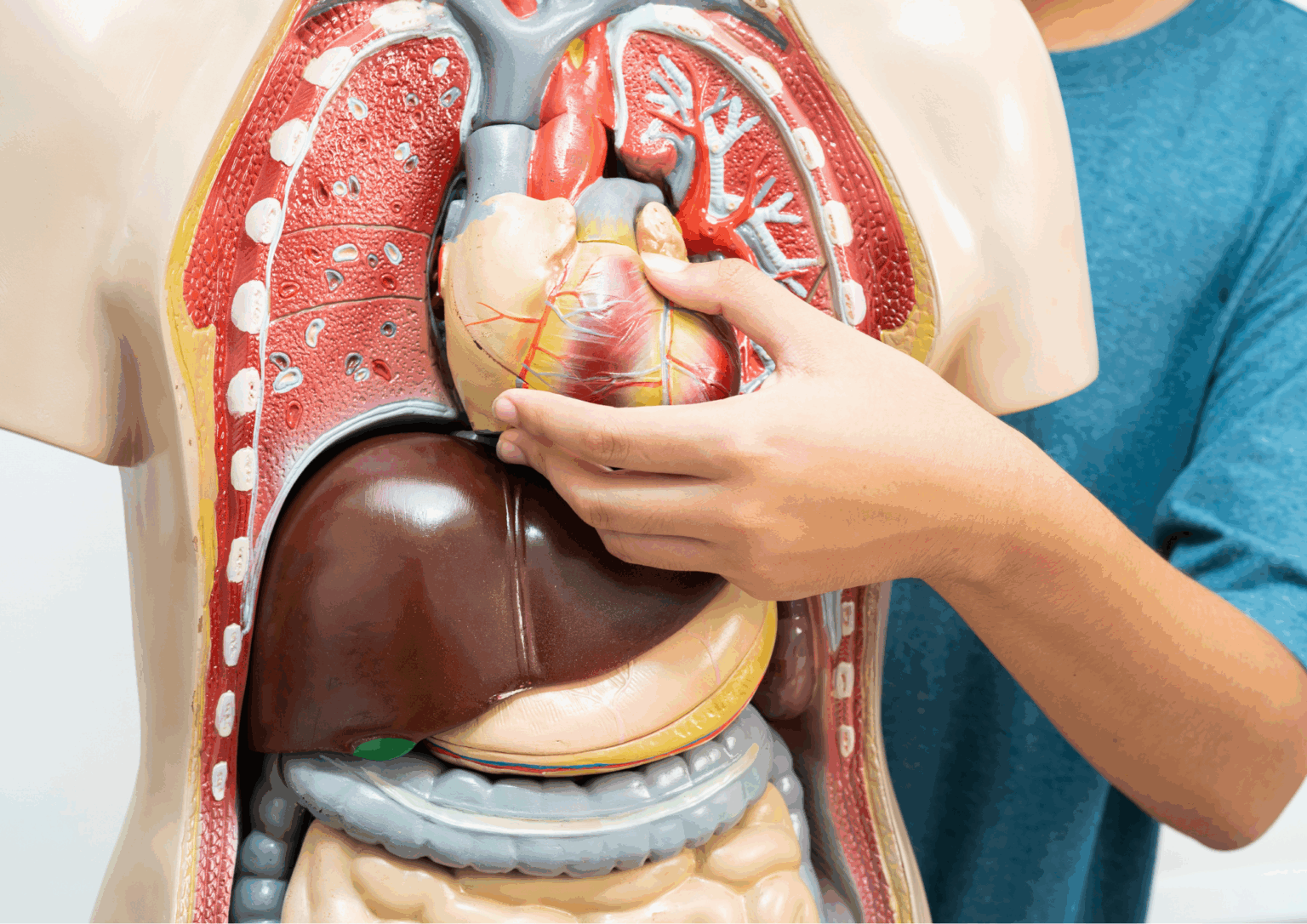
One of the most engaging aspects of Human Biology is its balance between structure and function. Students learn not only what the organs and systems are, but also how they work together in harmony. For example:
- The circulatory system transports oxygen and nutrients to support every cell.
- The nervous and endocrine systems coordinate rapid and long-term control.
- The immune system protects the body from infection through intricate defence mechanisms.
- The reproductive system ensures continuity and adaptation of the species.

By linking these systems to the experiences of daily life, Human Biology helps students appreciate the extraordinary coordination required for the body to function smoothly.
From Observation to Application
Laboratory investigations form the backbone of Human Biology learning. Students move beyond memorisation to discovery – conducting dissections, measuring physiological responses, and modelling processes such as gas exchange or reflex actions.
These experiences teach observation, accuracy, and ethical consideration – vital scientific skills that prepare students for university laboratory work and healthcare environments. The practical component also builds confidence, reinforcing theory with hands-on understanding.
Developing Scientific Thinking
In Human Biology, students are encouraged to think like scientists – forming hypotheses, collecting data, analysing results, and communicating conclusions. This scientific method nurtures curiosity and discipline. It also builds a bridge between biological theory and real-world practice.
For example, students might investigate the effects of exercise on heart rate, or model the spread of disease in a population.
These activities connect classroom learning with current global challenges, from public health to biotechnology.
Building Confidence in Year 11
The transition to ATAR Human Biology can be challenging, especially for students new to laboratory work or scientific writing. Early success comes from building consistent habits:
- Review each topic weekly to strengthen recall.
- Draw and label diagrams to consolidate structure and function.
- Practise explaining concepts aloud – teaching reinforces understanding.
- Learn the correct terminology for organs, tissues, and systems.
- Use past questions to build familiarity with exam-style wording.
Confidence grows when students focus on understanding, not just memorising. The best preparation for Year 12 is steady, reflective engagement throughout Year 11.
Pathways Beyond School
ATAR Human Biology opens doors to a wide range of university and vocational pathways, including:
- Medicine, nursing, and allied health sciences
- Physiotherapy, sports science, and nutrition
- Forensic and biomedical research
- Education, psychology, and public health
- Environmental and genetic sciences
Even for students not pursuing science, Human Biology provides transferable skills – logical analysis, ethical reasoning, and communication – that support success in any field.
Using ReviseOnline to Strengthen Understanding
To support every student’s learning journey, ReviseOnline provides structured tools that turn theory into mastery:
- ASSESSED delivers authentic, exam-style questions and instant feedback to help students practise applying concepts under exam conditions.
- PREPED offers guided study plans and time management strategies tailored to ATAR preparation.

Used together through the year, these tools help you learn the content, practise applying it, and refine how you communicate – a complete system for building confidence before Year 12.
Final Thoughts: The Science of Ourselves
Choosing ATAR Human Biology means choosing to understand yourself – from the smallest cell to the systems that sustain life. It’s a subject that combines scientific precision with human relevance, teaching both knowledge and empathy.
By studying Human Biology, students gain not only academic insight but also a lifelong appreciation for the complexity, resilience, and wonder of the human body. It is the science of connection – between mind and body, theory and practice, and ultimately, learning and life.