
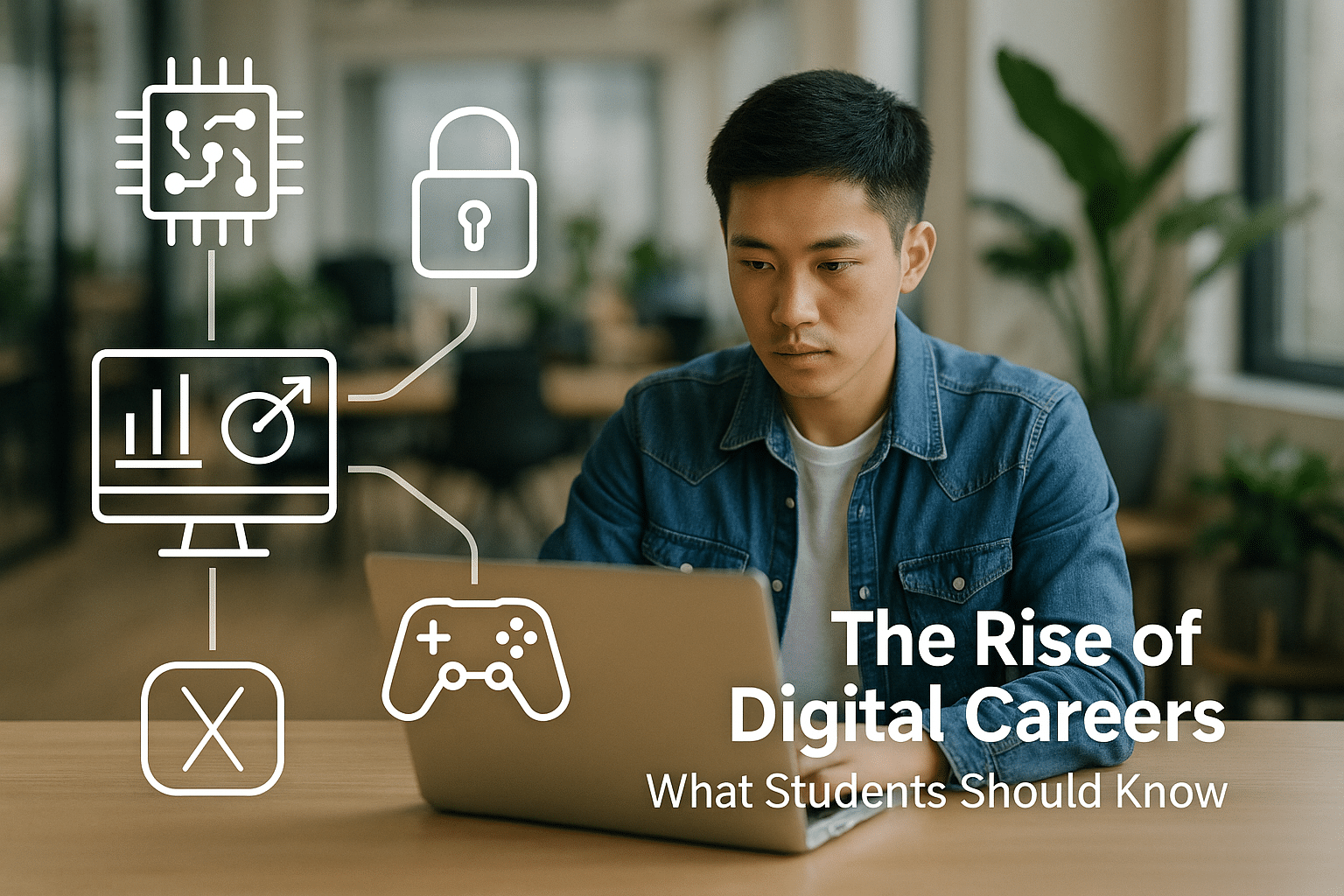
The Rise of Digital Careers: What Students Should Know is an urgent conversation for families of senior secondary students. Digital transformation is reshaping the job market faster than any previous industrial revolution. From artificial intelligence and cybersecurity to digital health and creative industries, the careers of tomorrow will look very different from today. Parents and educators have an important role in helping students understand these changes, adapt their learning, and prepare for opportunities in the digital economy. This article outlines why digital careers are growing, what skills are essential, the pathways available, and how families can support students to make informed choices.
Why Digital Careers Are Growing
Across the globe, digital careers are expanding rapidly. The World Economic Forum predicts that by 2025, 85 million jobs may be displaced by automation, but 97 million new digital roles will be created. Fields such as data science, artificial intelligence, cybersecurity, and health informatics are among the fastest-growing. Closer to home, Australia’s National Skills Commission has identified ICT and digital skills as shortage areas, with strong growth projected over the next decade. This trend reflects how every industry – from finance and medicine to agriculture and education – now relies on digital expertise to operate efficiently and competitively.

97 million new digital roles will be created
Skills Students Need for the Future
Success in digital careers requires a blend of technical and transferable skills. Core technical areas include coding, data analysis, cloud computing, and cybersecurity. However, soft skills are equally important: problem-solving, creativity, adaptability, and communication. Employers consistently highlight the need for graduates who can collaborate across disciplines and apply digital tools to real-world problems.
For example, a medical researcher may need to analyse genetic data, while an engineer may use AI modelling.
For students, this means developing both digital literacy and broad competencies that allow them to adapt as technologies evolve.
Pathways Into Digital Careers
There are multiple pathways into digital careers, ranging from university degrees to vocational education and industry certifications. University courses in computer science, information technology, data science, and engineering remain common routes. TAFE and vocational pathways offer practical skills in networking, cloud services, and cybersecurity. Industry certifications, such as Microsoft Azure, AWS, Cisco, or CompTIA, provide globally recognised credentials that employers value. Many employers now also recruit through apprenticeships and cadetships that combine study with workplace training. Students and families should explore pathways that align with individual interests, whether technical, creative, or analytical.
Examples of Emerging Digital Careers
The diversity of roles is striking:
- Artificial Intelligence Specialist: Designing and training machine learning systems.
- Cybersecurity Analyst: Protecting organisations from data breaches and online threats.
- Data Scientist: Interpreting complex datasets to guide decision-making.
- Digital Health Specialist: Using technology to improve patient care and health systems.
- Game Designer and Developer: Blending creativity with coding for entertainment and education.
- Sustainability Technologist: Applying digital solutions to environmental and energy challenges.
These roles highlight how digital careers intersect with nearly every sector, offering opportunities for students with diverse passions.
The Role of Parents and Educators
Parents and educators play a crucial role in helping students navigate digital futures. Awareness is key: many families are unfamiliar with the scale of change or the variety of digital roles available. Parents can encourage curiosity by supporting coding clubs, online courses, or STEM activities. Educators can integrate digital problem-solving into classroom tasks, exposing students to real-world applications. Work experience, internships, and mentorships also provide valuable insights. Above all, families should foster adaptability, encouraging students to pursue pathways that combine their interests with in-demand digital skills.
Challenges and Considerations
While opportunities are vast, challenges exist. The digital divide refers to the fact that not all students have equal access to technology or training, which can potentially widen existing inequalities. Some students may also feel overwhelmed by the pace of change or pressured to pursue technical roles even if their interests lie elsewhere. Schools and families must ensure digital career guidance is inclusive, balanced, and supportive of student well-being. It is equally important to challenge stereotypes, ensuring that young women and underrepresented groups see digital careers as accessible and rewarding. Policies and school initiatives should prioritise equity and access alongside skill development.
Key Takeaways
Digital transformation is reshaping every industry.
Technology-driven roles now span fields from healthcare to agriculture, creating new opportunities across all sectors.
Future careers need both tech skills and creativity.
Students will need coding, data, and cybersecurity skills—plus adaptability, communication, and problem-solving.
Multiple pathways lead to digital careers.
University, TAFE, and industry certifications all provide valid routes into tech-related fields.
Cybersecurity and data protection are critical growth areas.
Protecting digital systems and information is one of the fastest-expanding global industries.
Parents and educators are key guides in digital futures.
Encouraging curiosity, digital literacy, and career exploration helps students make confident choices.
Equity and inclusion must stay central.
Bridging the digital divide ensures all students—regardless of background—can benefit from emerging opportunities.