
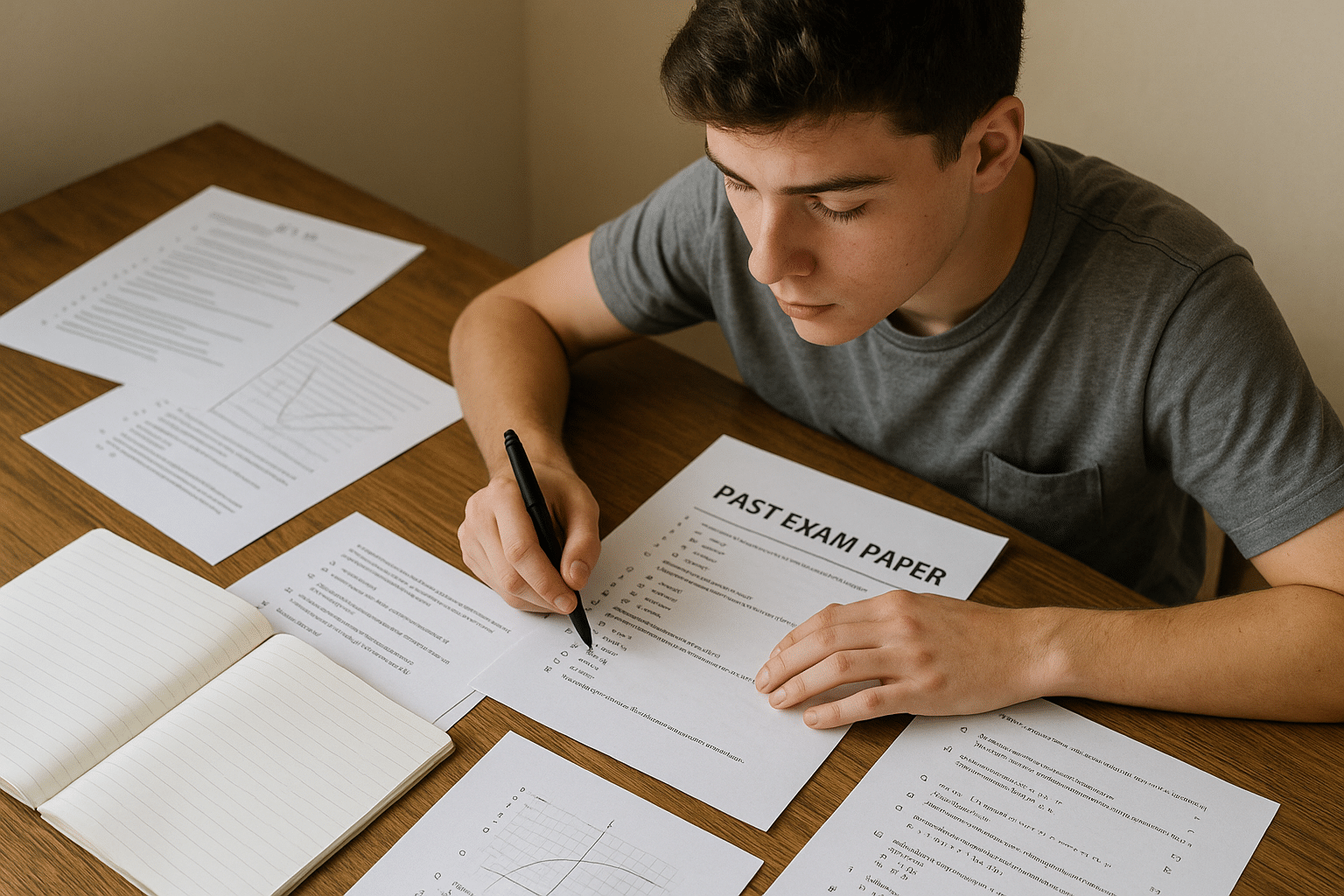
Past exam papers are a secret weapon when it comes to ATAR exam preparation. Practising with past papers allows you to experience real exam-style questions and conditions before the big day. In fact, past exam papers ATAR students use for revision can dramatically boost confidence, sharpen exam techniques, and reveal exactly where to focus your study efforts. Research and expert educational advice agree: working through these practice exams is one of the most effective Year 12 revision strategies for maximising your results. In this post, we’ll explore why past WACE/ATAR exam papers are so valuable and how to use them in a structured study plan to achieve WACE exam success.
Why Past Exam Papers should be part of your ATAR Study Plan
Integrating past exam papers into your Year 12 study routine can elevate your performance in multiple ways. Education experts and cognitive research point out several key benefits:
- Familiarity with exam format and question styles: Past papers mirror the format of actual ATAR exams, helping you become comfortable with the types of questions and answers required. The Western Australian Department of Education recommends attempting past exams to “familiarise yourself with the types of answers you need to give.”[1]

By practising under exam-like conditions, you won’t be caught off guard by tricky wording or unexpected sections on exam day. This familiarity breeds confidence and reduces surprises.
- Improved exam technique and time management: Working through full-length practice exams teaches you how to pace yourself. You’ll learn how long to allocate to each section or question, and develop strategies (like deciding which questions to tackle first) that maximise your score. Just as an athlete trains under competition conditions, doing timed practice papers builds your “exam stamina” and refines your technique for the real thing. Over time, you’ll get better at writing succinct answers under pressure and avoid running out of time.
- Identification of knowledge gaps: One of the biggest advantages of practice exams is finding out what you don’t know. When you mark a past paper (using the answer key or with your teacher’s help), any questions you got wrong reveal areas that need more study[2]. As the University of Pennsylvania’s learning centre notes, practice questions “show us if we understand the material … and help identify any gaps we may have.”[2] For example, if you consistently miss marks on organic chemistry questions or struggle with a particular essay theme, you can recognise those weak spots early. This diagnostic feature lets you target your revision more effectively, a crucial ATAR study tip. It’s far better to discover misunderstandings before the exam, when you still have time to clarify with a teacher or revise those topics.
- Boosted memory retention through active recall: Completing past papers isn’t just an assessment tool – it’s also a powerful learning method. Cognitive science calls this the testing effect: actively recalling information (as you do in practice tests) strengthens your memory more than passive review. Numerous studies have found that taking practice tests significantly improves learning and retention compared to simply rereading notes[3]. In other words, every past paper you do is a study session in itself.
- By writing out answers from memory, you reinforce the material in your brain. This means you’ll be more likely to remember the content in the final exam. As one psychology professor explains, “there’s decades and decades of research showing that taking practice tests will actually improve your learning”[3] – a compelling reason to include past exams in your revision routine.
- Greater confidence and reduced exam anxiety: Exam stress is common in Year 12, but practice can help here too. Sitting several practice exams gradually desensitises you to the pressure of exam conditions. Essentially, you become used to the experience. A recent meta-analysis of 24 studies reported that students who took practice tests not only performed better academically but also felt less test anxiety on average[4]. The likely reason is twofold: first, repeated exposure makes the exam environment feel normal, not scary; you’re “not being thrown into the deep end” unexpectedly[5]. Second, as your mastery of the content improves with practice, you naturally feel more confident going into the exam. We tend to be less anxious about tasks we know we can handle well. By the time the real ATAR exams arrive, you’ll have a sense of “I’ve done this before,” which can greatly calm your nerves. (Of course, a little bit of nervous energy is normal, but you’ll avoid the paralysing anxiety that comes from lack of preparedness.)
- Exposure to real exam-standard questions: Past ATAR papers are written and vetted by the same authorities that set your final exams (for example, the NSW Education Standards Authority for HSC in NSW). This means the difficulty level and style are an exact match to what you’ll face. Practising with these questions ensures you’re revising the right skills and content at the right standard. You’ll get a feel for how marks are allocated and what examiners expect in high-scoring answers. Using only textbook exercises or teacher-made questions might not capture those subtleties.

In short, past papers are authentic practice.
- Structured revision and goal-setting: Incorporating regular past papers into your study schedule brings structure to your revision. For instance, you might plan to complete one paper per week for each subject in the months leading up to finals. This gives you concrete goals to work towards and breaks up your study into manageable chunks. It’s a more active and engaging approach than simply reading notes. Some top students treat past exams as milestones, e.g. “By the end of this month, I will have done the last 5 years of Maths Methods exams.” This kind of structured practice can keep you motivated and on track, embodying the ReviseOnline values of systematic learning and student empowerment.
How to Use Past Exam Papers Effectively
Simply doing practice exams is beneficial, but how you do them matters, too. Here are some teacher-recommended strategies and Year 12 revision strategies to get the most out of your past paper practice:
- Start early and practise consistently: Don’t save past papers until the final week before exams. Begin integrating them into your study plan early in Year 12 (or at least several weeks before the exams). Regular practice is key. For example, after finishing a topic in class, try some past questions from that topic to reinforce your learning. Starting early gives you time to complete multiple papers and learn from mistakes without last-minute panic. It also spreads out the workload. Consistent practice over months is far more effective than cramming in three papers the night before the exam.
- Simulate real exam conditions: When attempting a past paper, try to recreate the exam environment as closely as possible. Sit in a quiet room, time yourself strictly according to the official exam duration, and remove distractions (yes, that means putting your phone away!). Treat it seriously – imagine this is the actual ATAR exam. By doing so, you practice not just your knowledge but also your endurance and focus. You’ll learn how it feels to work under time pressure for three hours, which builds mental stamina. It can be tempting to pause or look up answers when stuck, but resist that urge during these simulation sessions. The goal is to identify what you genuinely know under exam conditions. As one learning specialist advises, “try to do a couple of practice exams before the real thing… This will help you get a feel of not only how you are doing with the material but also how to tackle questions in an exam format.”[6] The more your practice sessions resemble the real thing, the more comfortable you’ll be on exam day.
- Review your performance and learn from it: A practice exam is only as useful as the feedback you get. After completing a paper, always mark your answers and analyse the results. Use the official marking key or scoring guide if available (these are often provided for past ATAR exams by the examining authority). Go through each mistake to understand what went wrong, eg did you misread the question, lack the knowledge, or just commit a silly error? Note any patterns in the questions you missed. This review process is where a lot of the learning happens. If possible, ask a teacher to look over your written responses (like essays or short answers) and give constructive feedback. They can tell you if your answer meets the ATAR standards or how to improve it. The aim is to close the gap on any weak areas before the next practice or the real exam. Remember, making mistakes on past papers is actually a good thing, it means you’re identifying pitfalls now, rather than in the actual exam when it counts.
- Target your weak areas: Use the insights from your practice exams to refine your study focus. Spend extra time revising topics where you performed poorly on the past papers[7]. For example, if your past paper results show that you lost most marks in calculus questions or source analysis questions in Modern History, prioritise those in your upcoming study sessions. You might redo similar questions, seek help to clarify concepts, or write practice essays on those themes. On the other hand, if you consistently ace a particular section, you can have confidence in that area (though still review it periodically). This targeted approach ensures you’re studying smarter, not just harder; you direct your energy where it’s needed most.
Many successful Year 12s credit this strategy for boosting their ATAR scores: by relentlessly attacking their weaknesses through past paper practice, they turned weaknesses into strengths by exam time.
- Balance practice with revision and advice: While past papers are fantastic, they shouldn’t be your only study method. Be sure to balance them with other revision techniques – for example, summarising notes, flashcards, or group study discussions. Past papers will highlight what you need to study; you should then go back to textbooks or class notes to refresh those areas. It’s also a good idea to discuss tricky past questions with classmates or teachers. Often, teachers can provide insight into why the examiners set a question a certain way, or what they look for in top-band answers. Use those insights to guide how you answer similar questions next time. For broader study planning, consider checking out [Link to related post on ATAR Exam Preparation Strategies] for additional ATAR study tips beyond just past exams. Incorporating a variety of study strategies will give you well-rounded preparation.
- Make use of available resources and tools: Take advantage of the resources at your disposal. Many state education authorities (like SCSA in WA) publish free past ATAR exam papers and marking keys on their websites – download these and use them liberally. Furthermore, online platforms such as ReviseOnline ASSESSED can enrich your practice routine. For example, ASSESSED offers a database of exam-style questions and even full-length practice exams that you can take online. It provides automated marking and analytics to track your progress, which is like having a personal tutor point out your strengths and weaknesses. Using such tools in conjunction with official past papers can accelerate your improvement. Just be sure any third-party resource is aligned with the Australian Year 12 curriculum (HSC or your state’s equivalent) so that the style and difficulty of questions are relevant.
Why a digital platform like ReviseOnline ASSESSED accelerates improvement
Doing past exam papers is critical for familiarity – but real performance gains come from insights. This is where ReviseOnline’s ASSESSED platform changes everything. ASSESSED doesn’t just let you practise questions – it maps every question (past papers AND new unseen items) to deep syllabus-level tags so you can see exactly where your strengths and weaknesses sit, down to the specific syllabus point. Instead of guessing what to revise next, the platform shows you precisely where to focus your time. Combined with adaptive learning features that adjust question difficulty and selection based on your performance, you’re not just practising – you are strategically closing gaps faster.
And when paired with CALCED, the impact compounds even further. Using our ATAR Calculator, CALCED tracks your ongoing performance across subjects and shows how your results translate into projected TEA and ATAR outcomes – so you’re not just studying harder, you’re studying deliberately toward a target. By setting goals (ATAR target), CALCED continually updates your progress, so you always know where to invest your effort next – ensuring every hour of study drives you closer to the ATAR outcome you’re aiming for.
Building Confidence for Exam Day
By the time you’ve worked through a solid number of past exam papers for each subject, you’ll likely notice a difference in how you approach exams. Your responses become more structured and precise, you manage your time more efficiently, and most importantly, you develop an inner confidence. Think of it as training: just as a marathon runner feels ready after clocking up enough practice miles, a student feels ready for the ATAR exams after enough practice papers. This confidence is not arrogance; it’s the calm assurance that you know what to expect and how to handle it.
To illustrate, imagine a student named Alex who was very anxious about the final exams. At the start of Year 12, Alex could barely finish the English ATAR paper in time and often blanked out on tough questions. Instead of giving up, Alex incorporated one past paper exercise every two weeks per subject, under timed conditions. The first few were challenging and revealed a lot of gaps – for instance, Alex realised his chemistry problem-solving needed work and that he tended to overwrite in history essays. But he used that feedback to improve. Fast forward to just before exams: Alex has completed about 10 past papers for each subject. In mock exams at school, he now finishes with minutes to spare, and his answers hit the key points succinctly. Walking into the exam hall, Alex feels prepared and empowered, not because he crammed the night before, but because he’s essentially already sat this exam several times during practice. Stories like Alex’s are common – and you can create your own success story by following these strategies.
Conclusion
In summary, practising past exam papers is a proven way to maximise your ATAR results. It’s not about rote memorisation or “spotting” future questions, but about improving your skills, knowledge, and exam mindset. By using past papers to familiarise yourself with exam formats, refine your time management, identify and fix your weak areas, and build confidence, you’ll be well on your way to achieving your best possible score. Remember to start early, practice regularly, and learn from each attempt. Combine this approach with your other ATAR study tips and support from teachers, and you’ll enter the exams feeling ready to excel.
Good luck with your Year 12 studies, and embrace the challenge – with enough practice and the right strategies, you can walk into those ATAR exams knowing you’ve done everything possible to succeed. Now, grab a past paper and get started! 💪
Key Takeaways
Past exam papers provide the closest realistic experience to the actual ATAR exam format and expectations.
Timed practice using past papers strengthens exam technique, pacing, and stamina under pressure.
Reviewing marked past papers quickly reveals weak areas, letting you target revision more effectively.
Active recall through practice testing significantly improves memory retention compared to passive study.
Regular exposure to real exam-standard questions builds confidence and reduces anxiety leading up to finals.