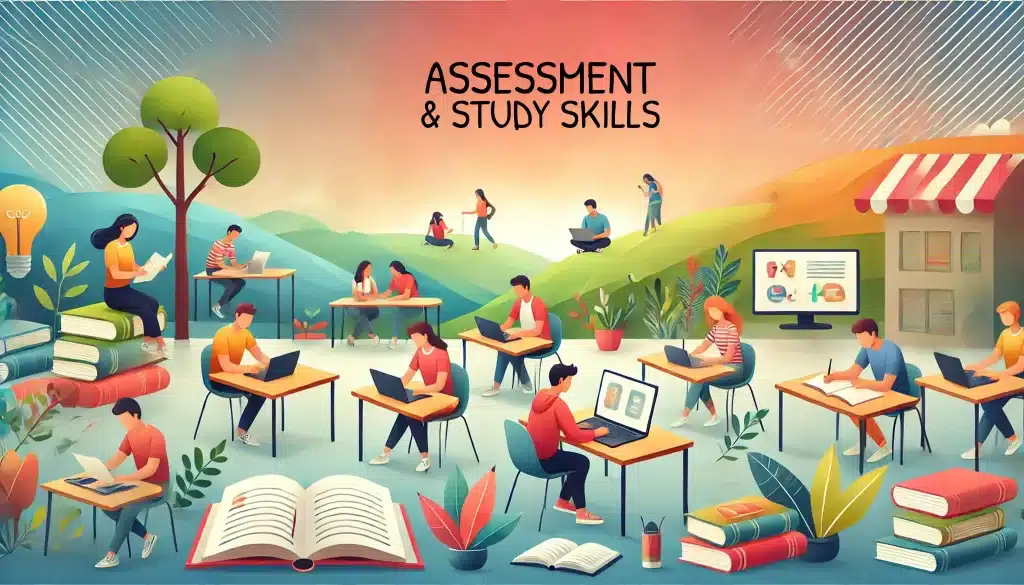


This story draws on ReviseOnline’s real experiences with families over many years, combining shared insights and outcomes into the fictional ‘Parker family’. Their journey reflects the real challenges parents and teachers face in balancing school and life, managing study stress, and supporting student wellbeing at home. It highlights how collaboration, structure, and emotional literacy can turn everyday routines into opportunities for balance and growth.
Understanding the Pressure Points
Teachers often witness the pressure that builds up when academic expectations meet the realities of family life. Homework deadlines, co-curricular commitments, and the increasing demands of middle school can strain even the most supportive households. In the Parker family’s case, both parents worked full-time while their daughter, Emma, entered Year 9, traditionally a period marked by heightened academic transition. Her teachers observed mounting anxiety, inconsistent sleep, and an apparent loss of motivation. Instead of attributing these symptoms solely to teenage mood, the school took a collaborative, family-centred approach.
Balancing School and Life: Strategies for Success
The collaboration began with a meeting between Emma’s teachers, her parents, and the school’s wellbeing coordinator. The team identified key stress triggers, including overloaded evenings, lack of clear communication, and unrealistic study expectations. Together, they set achievable weekly goals, prioritising depth of learning over volume of tasks. Teachers reduced homework overlap between subjects and provided a transparent assessment calendar.

At home, the Parkers introduced a structured routine with consistent start and finish times for study, allowing time for rest and family conversation.
This approach reflected ReviseOnline’s long-standing observation that when teachers and parents co-design learning routines, students feel supported rather than supervised. The clarity of roles reduced arguments at home and helped Emma develop autonomy. She began managing her own timetable, checking due dates in advance, and identifying when she needed help.
“When teachers and parents co-design learning routines, students feel supported rather than supervised.”
Building Emotional Literacy
An often-overlooked component of study stress is emotional awareness. ReviseOnline’s work with families has consistently shown that students who can articulate their stress experience are better equipped to manage it. Emma’s English teacher introduced reflective writing activities where students described how they felt before and after study sessions. At home, her parents followed through by normalising discussions about feelings of frustration or fatigue. They encouraged Emma to rate her stress levels each evening using a simple one-to-five scale, then discuss what might help lower them. This joint emotional vocabulary bridged the communication gap between home and school.
Research-Based Strategies That Make a Difference
Evidence from educational psychology supports what the Parkers experienced. Research by the Australian Council for Educational Research (ACER, 2023) shows that structured study routines combined with emotional awareness practices lead to improved student resilience and focus.

Studies in the UK’s Education Endowment Foundation echo similar findings, linking parent–teacher collaboration with measurable gains in wellbeing and academic engagement.
ReviseOnline has integrated these insights into its study planning and analytics tools, giving both teachers and parents access to meaningful data about student habits, consistency, and outcomes.
In practical terms, this means families can move away from reactive crisis management towards proactive learning support. Teachers can monitor when workloads spike, while parents can reinforce calm, predictable home environments. When both parties work from the same data, misunderstandings are reduced, and students perceive study not as a burden but as a shared family priority.
Reframing Success
For the Parkers, one of the most important shifts was redefining what success looked like. Early on, conversations focused on marks and test results. Gradually, the family and teachers began celebrating consistent effort, self-management, and well-being milestones. By Term 3, Emma was completing her tasks on time, sleeping better, and showing renewed interest in class. Her parents described the change not as a sudden transformation, but as a gentle rebalancing. The home became a place for encouragement rather than correction.
“Students like Emma thrive not because the pressure disappears, but because it becomes manageable, predictable, and shared.”
Guidance for Teachers Supporting Families
Teachers can have a significant influence on how families approach study stress. By sharing small, actionable steps, they empower parents to reinforce learning without pressure. Based on ReviseOnline’s long-term experience working alongside schools, several practices have proven particularly effective:
- Encourage parents to co-create study timetables that include scheduled downtime.
- Provide early notice of assessment dates and explain workload expectations.
- Share progress in positive terms, focusing on effort, engagement, and improvement.
- Discuss the emotional side of study, helping families build a shared language around stress.
- Offer short, consistent communication updates rather than reactive problem calls.
Key Takeaways
Balanced school and home life begins with structured, predictable routines.
Collaboration between teachers and parents reduces stress and confusion.
Emotional literacy is essential for long-term resilience and motivation.
Success should be defined by growth and wellbeing, not just grades.
Teachers play a vital role in modelling calm, balanced approaches to study.
Shared data and consistent communication prevent small issues from escalating.